20-01-2026
Exploring Shadows
Year 6 have been deepening their understanding of how shadows are formed, combining science with creativity in a hands-on and highly enjoyable lesson. The children explored how light behaves, how shadows are created, and how different effects can be achieved by changing the position and angle of a light source.
To begin, the children investigated how shadows change depending on how much light is being blocked. They discovered that:
- The closer an object is to the light source, the more light it blocks, resulting in a larger shadow.
- Moving the object further away reduces the amount of light blocked, creating a smaller shadow.
- Changing the angle of the light source alters the direction and shape of the shadow.
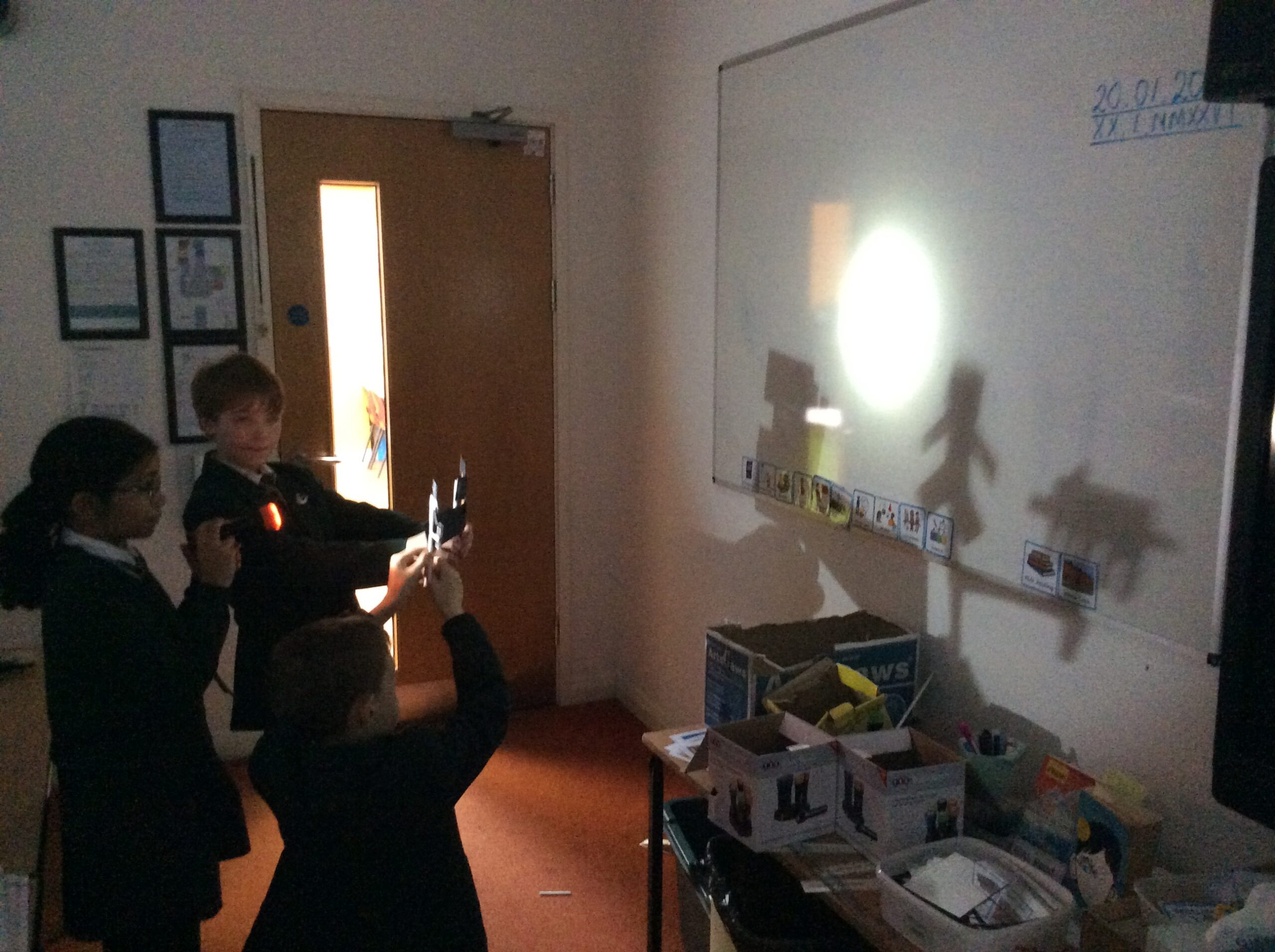
Building on this scientific understanding, the children then created their own shadow puppets and worked in groups to develop short performances.


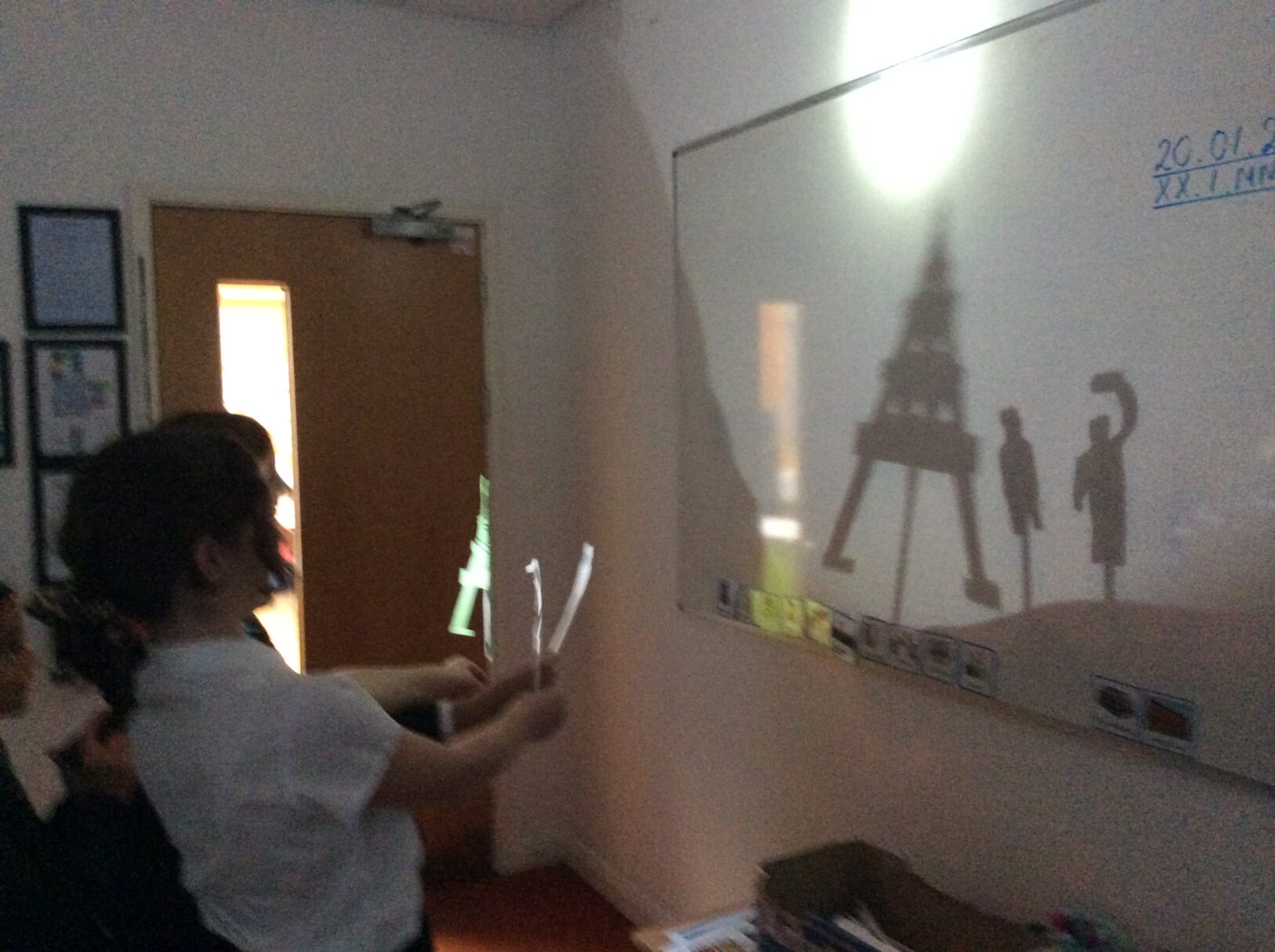
They experimented with moving their puppets closer or further away from the light and adjusted angles to create different visual effects, including changes in size, shape, and smooth transitions between scenes.
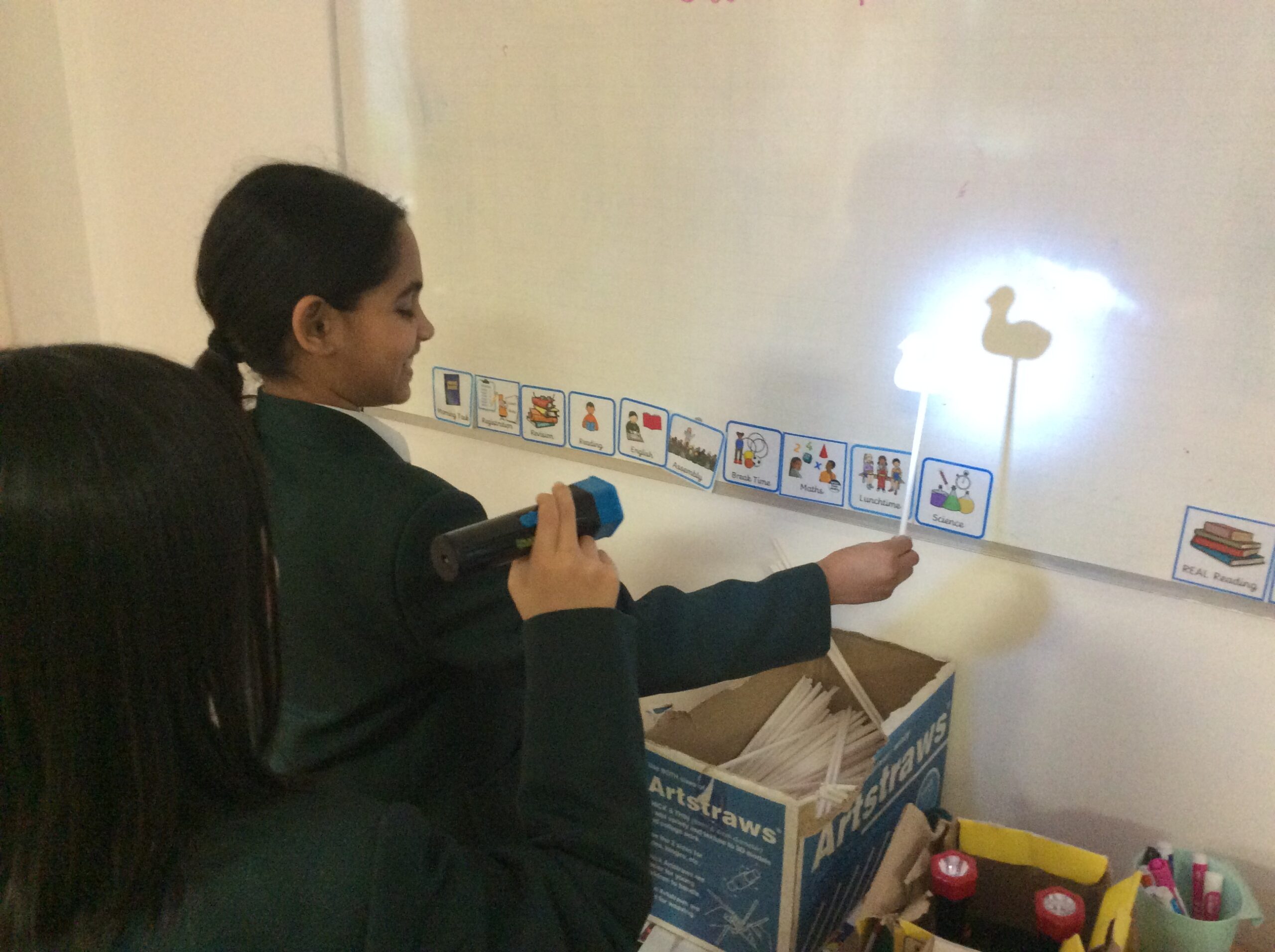


At the end of the lesson, each group performed their shadow puppet show. The most effective performances were those where children clearly applied their scientific knowledge—using shadow size changes, direction shifts, and creative transitions to enhance their storytelling.