13-03-2026
Year 6 Take Action on Plastic Pollution
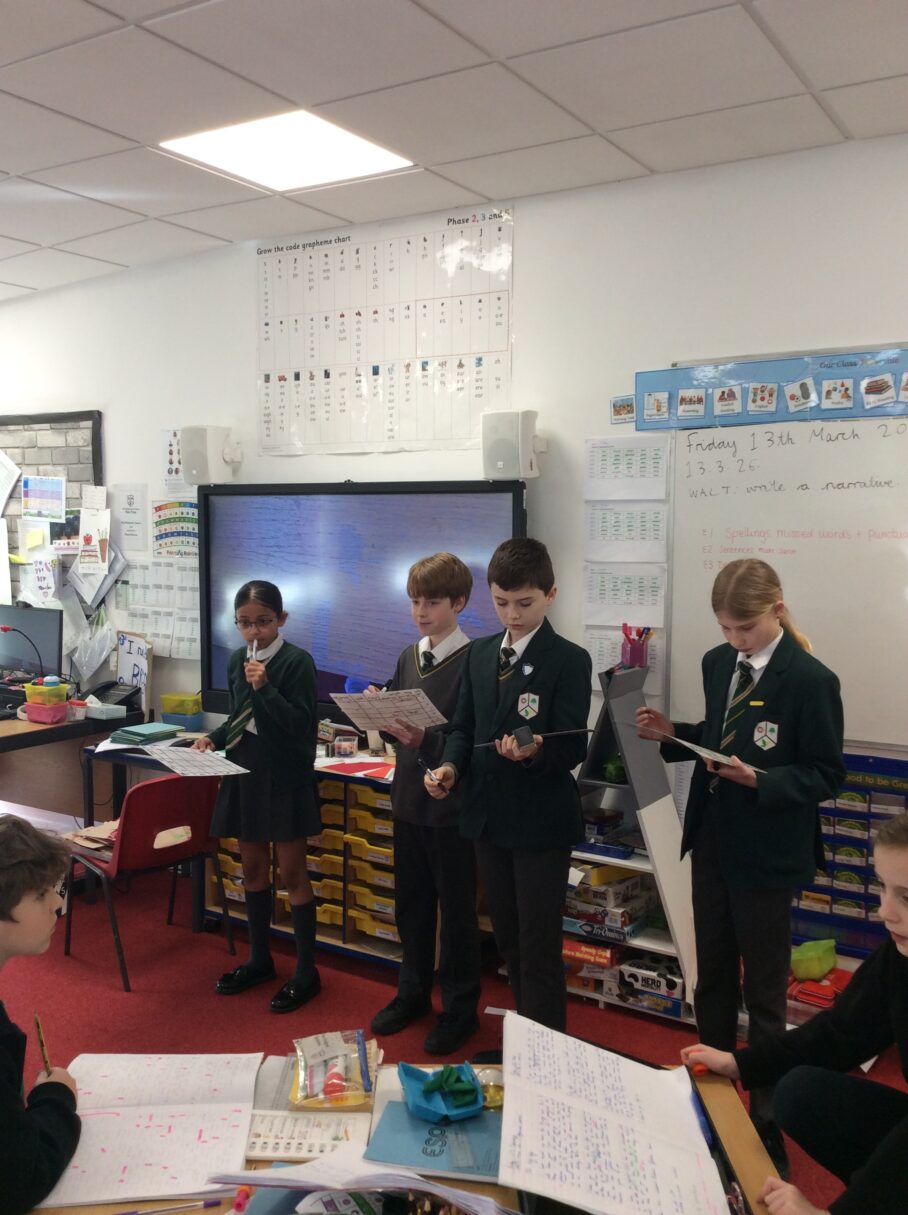
Over the past half term, Year 6 have been exploring the global issue of plastic pollution and discovering the impact it has on our planet. Through a series of thought‑provoking lessons, pupils have developed a deeper understanding of how plastic is produced, how it affects the environment and what we can do to make a positive difference.
How Long Does Plastic Last?
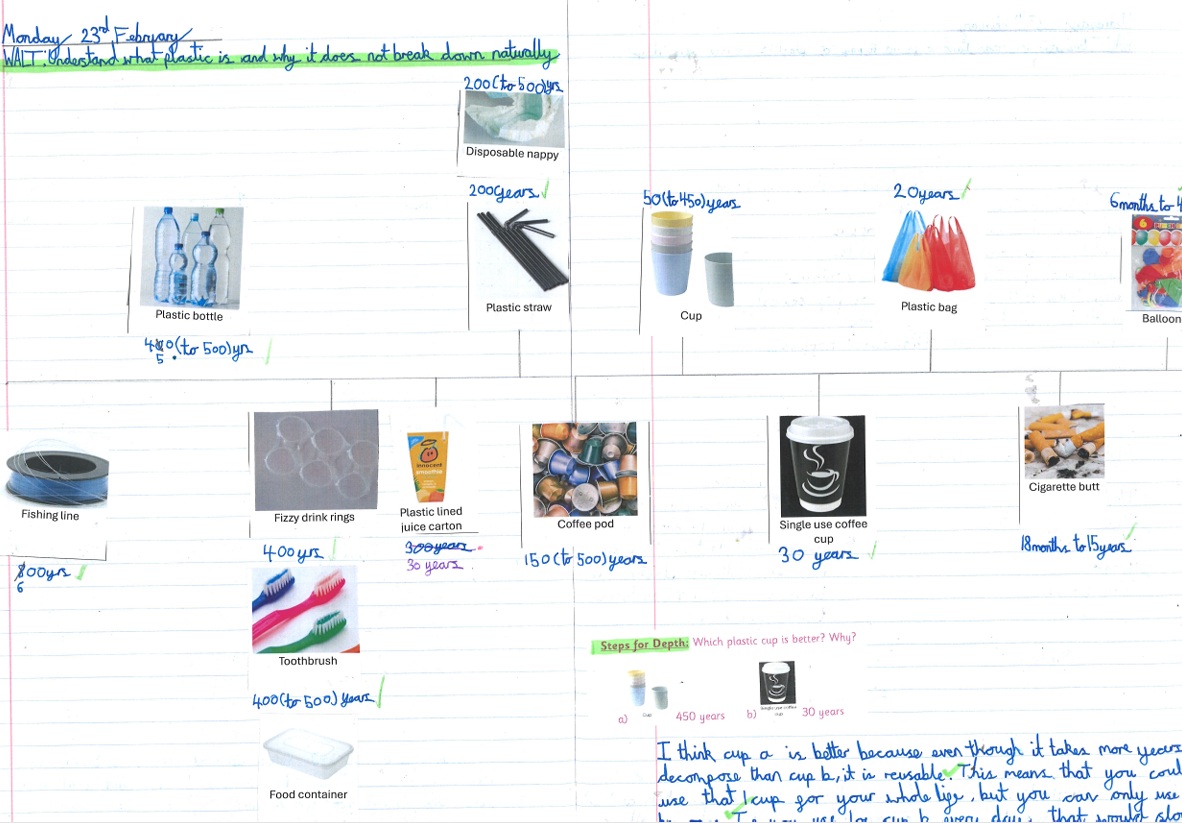
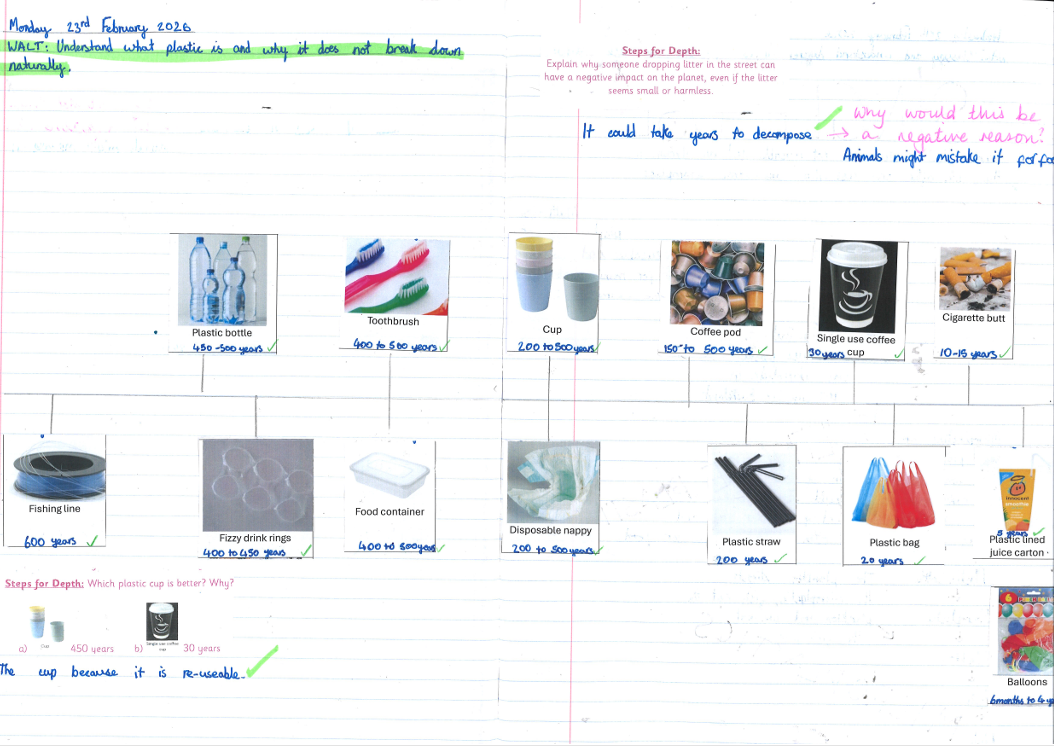
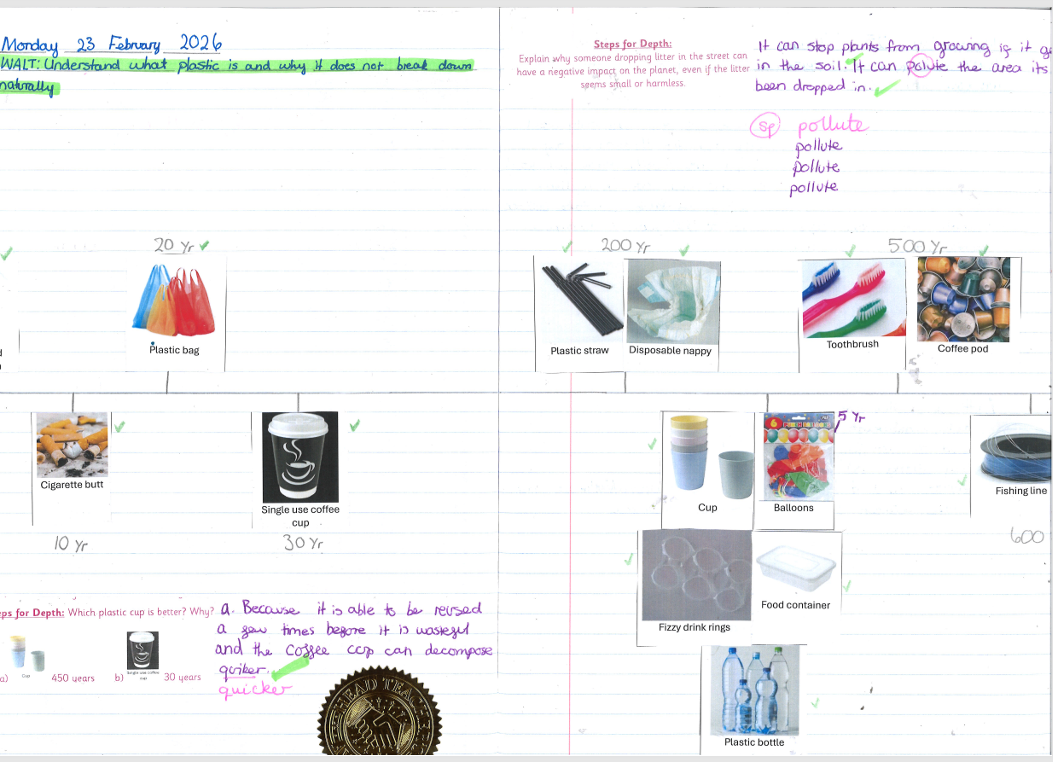
In our first lesson, pupils investigated how long everyday plastic items take to decompose. They were surprised to learn that:
- Cigarette butts can take around 10 years to break down
- Plastic cups can take up to 400 years
- Fishing lines can take as long as 600 years
This helped the children understand why plastic pollution is such a serious and long‑lasting problem.
Types of Plastics and Microplastics
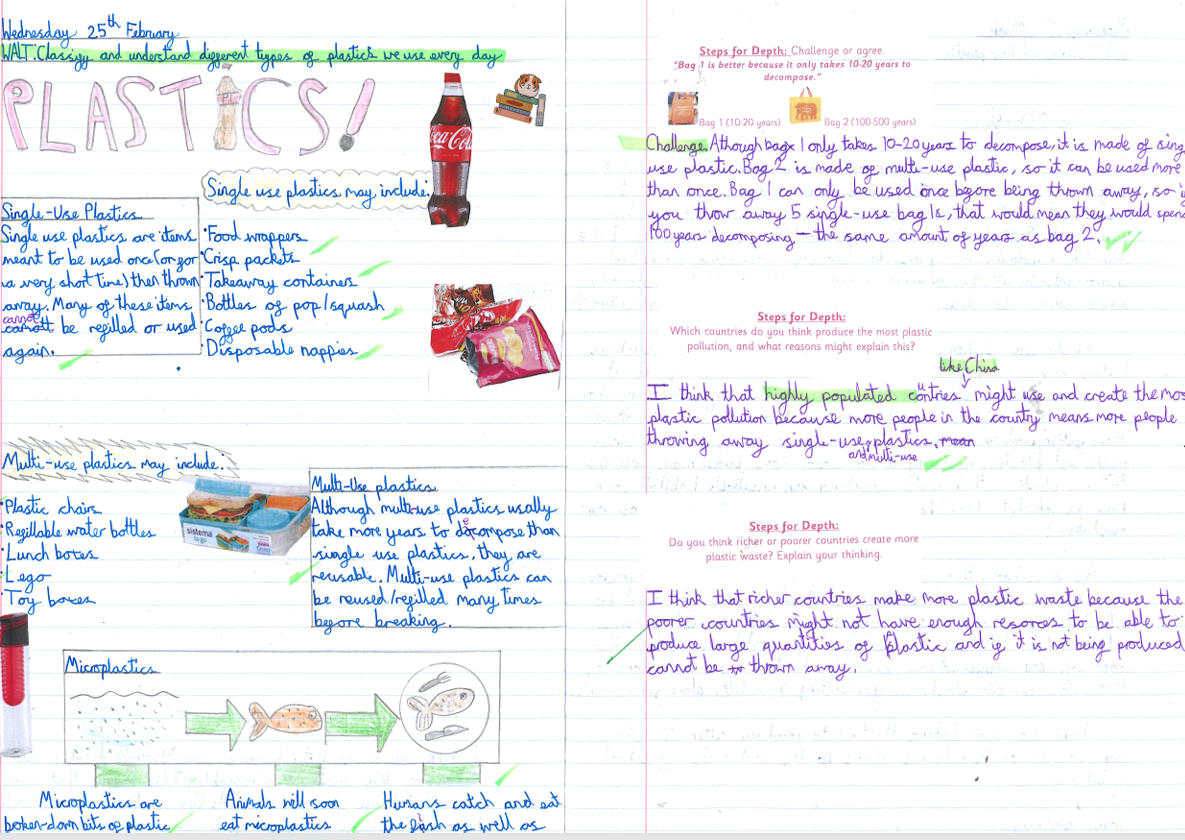
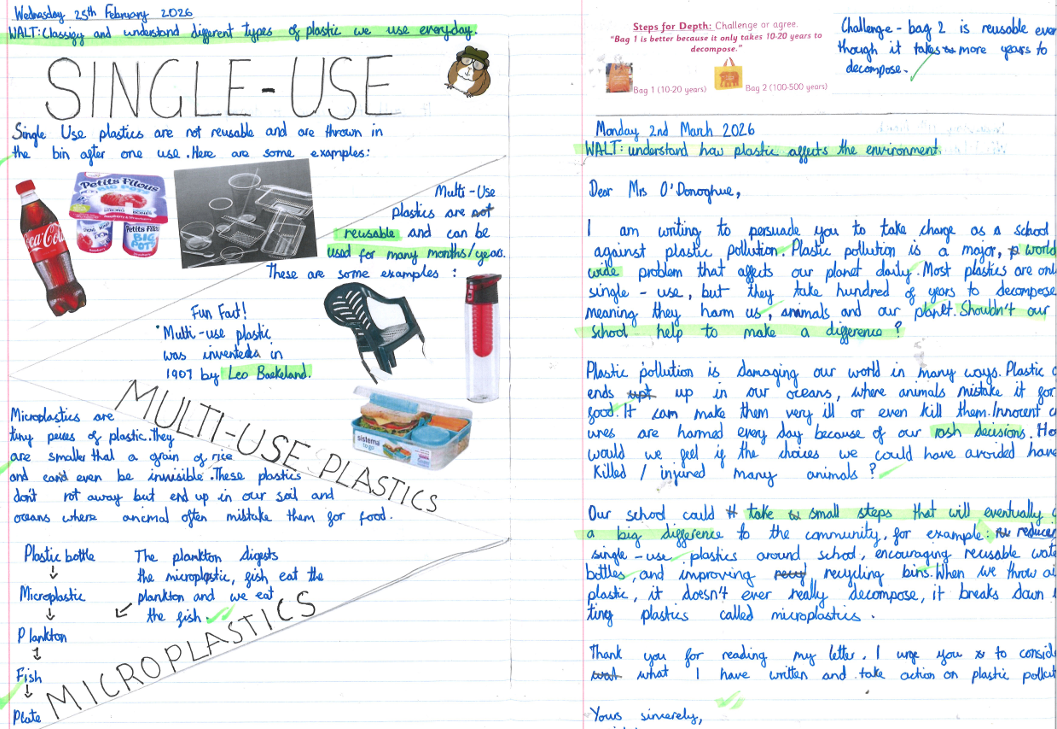
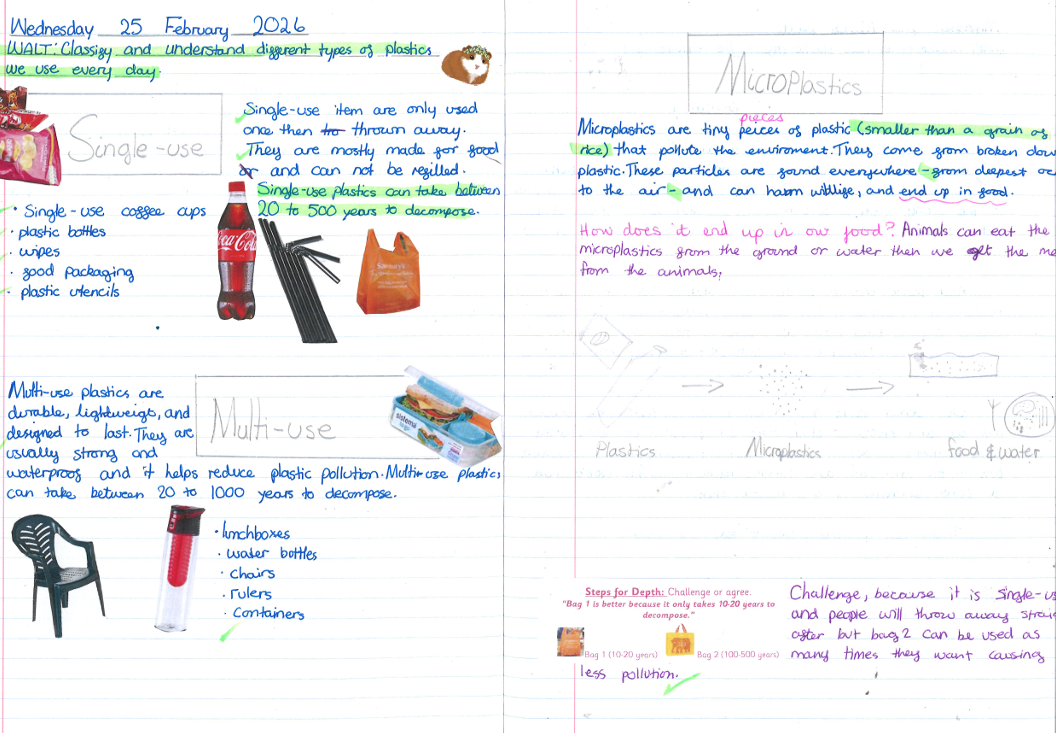
Next, Year 6 explored the different types of plastics, including single‑use and multi‑use plastics. They also learned about microplastics—tiny pieces of plastic that enter our oceans, water systems and even our food chain. This sparked important discussions about how everyday choices can have hidden consequences.
The Impact on Our Environment
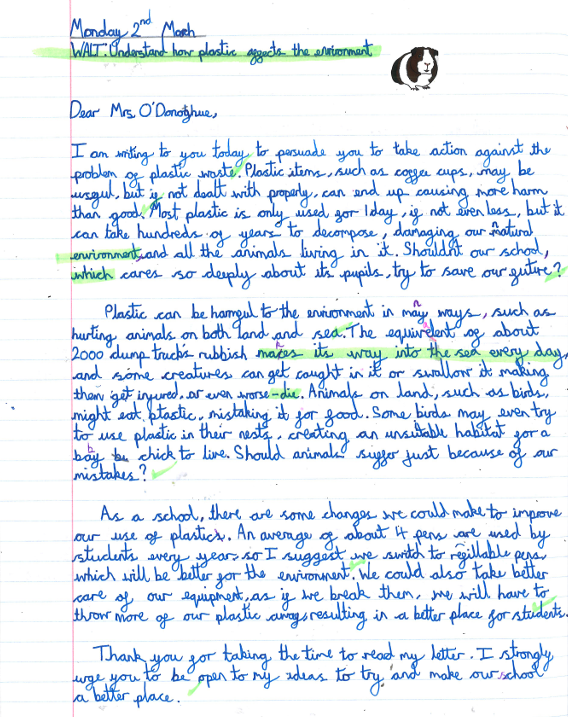
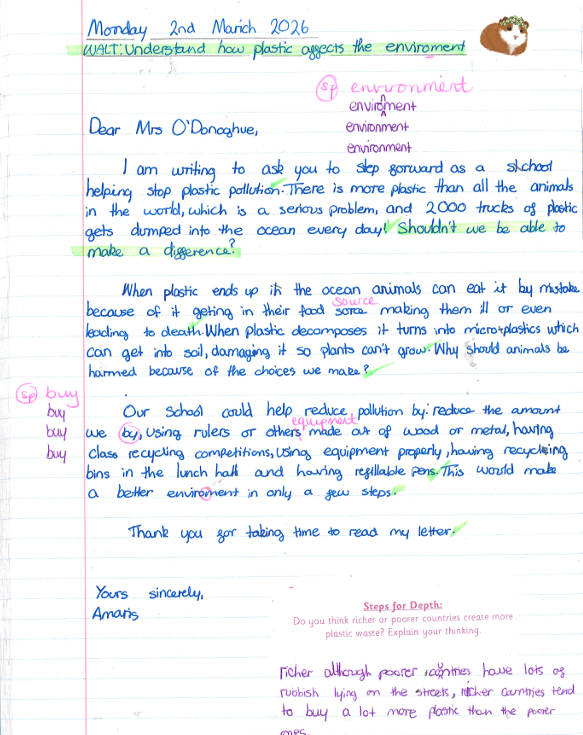
In the third lesson, pupils examined the harm plastic pollution causes to wildlife, oceans and natural habitats. They reflected on what individuals, schools and communities can do to reduce plastic waste. As part of this work, the children wrote persuasive letters to the headteacher, outlining the dangers of plastic pollution and suggesting ways our school could help.
A Global Perspective
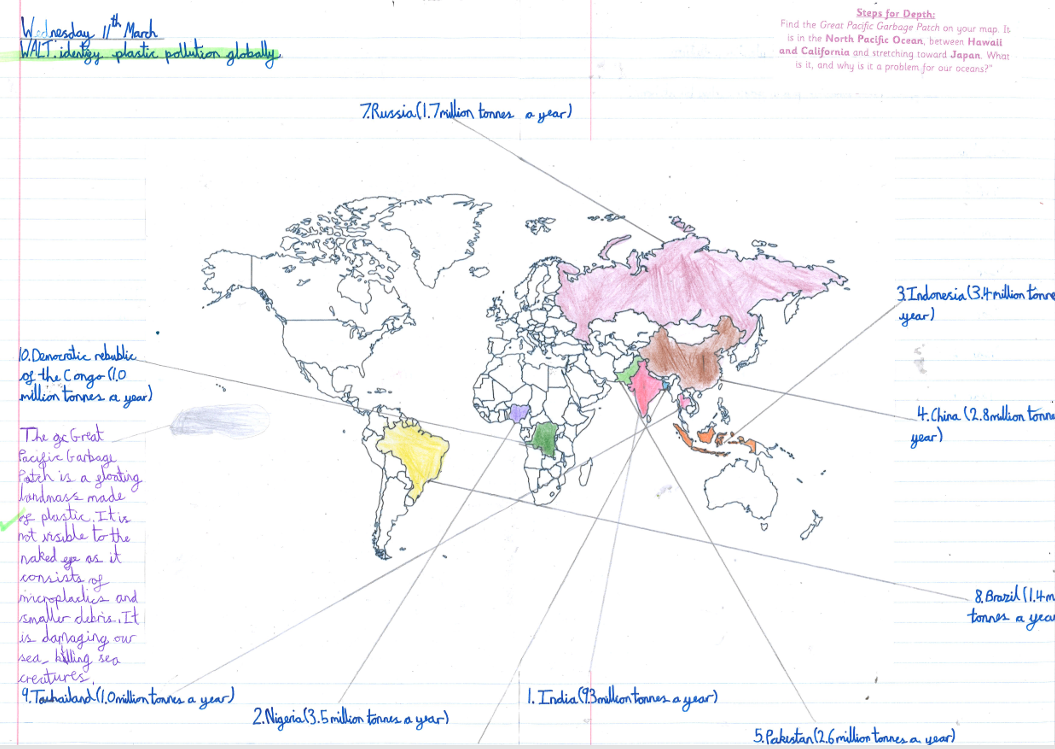
Year 6 then looked at plastic pollution around the world, identifying which countries produce the most plastic waste and exploring why some nations struggle more than others to manage it.
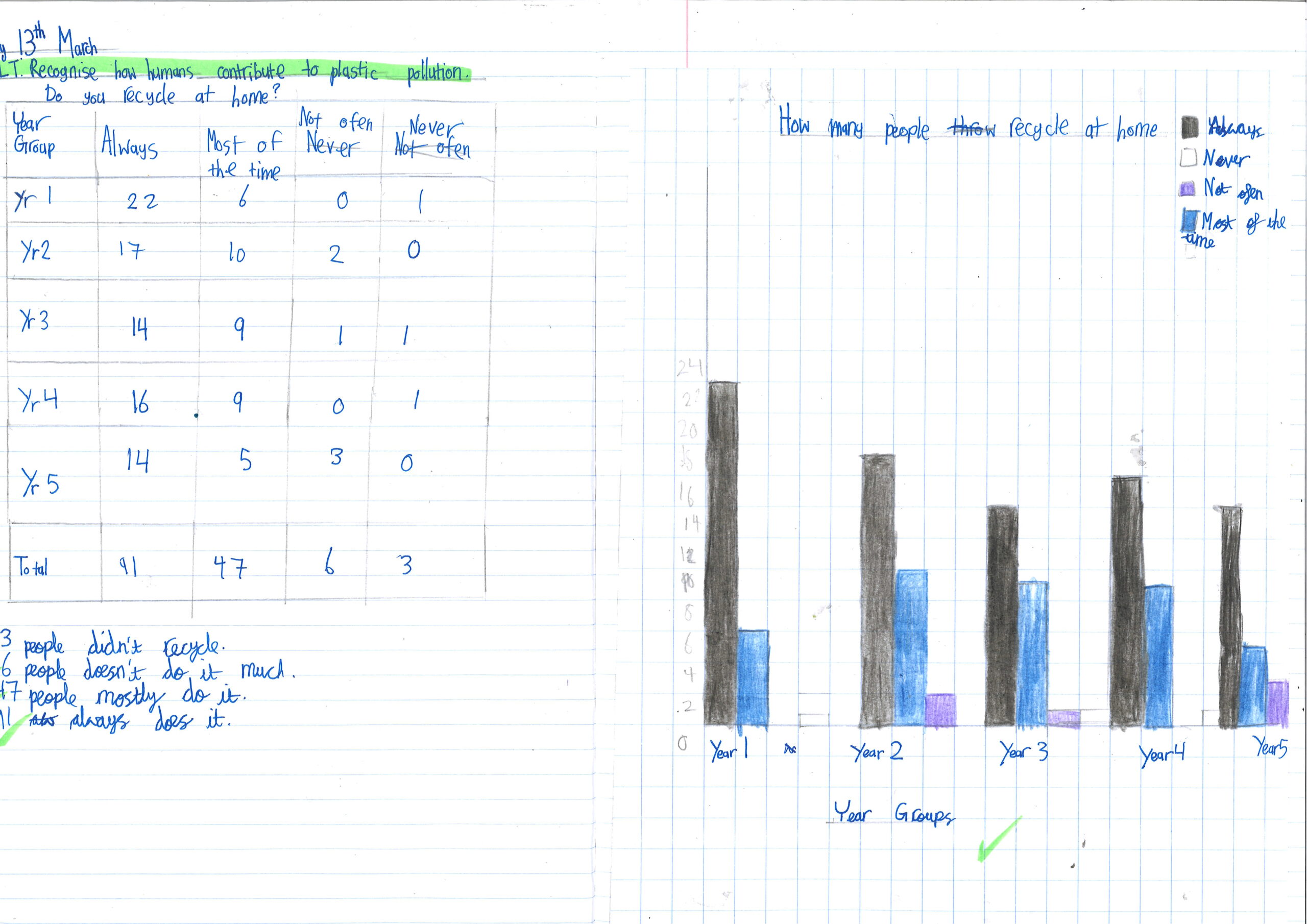
Surveying Our School Community
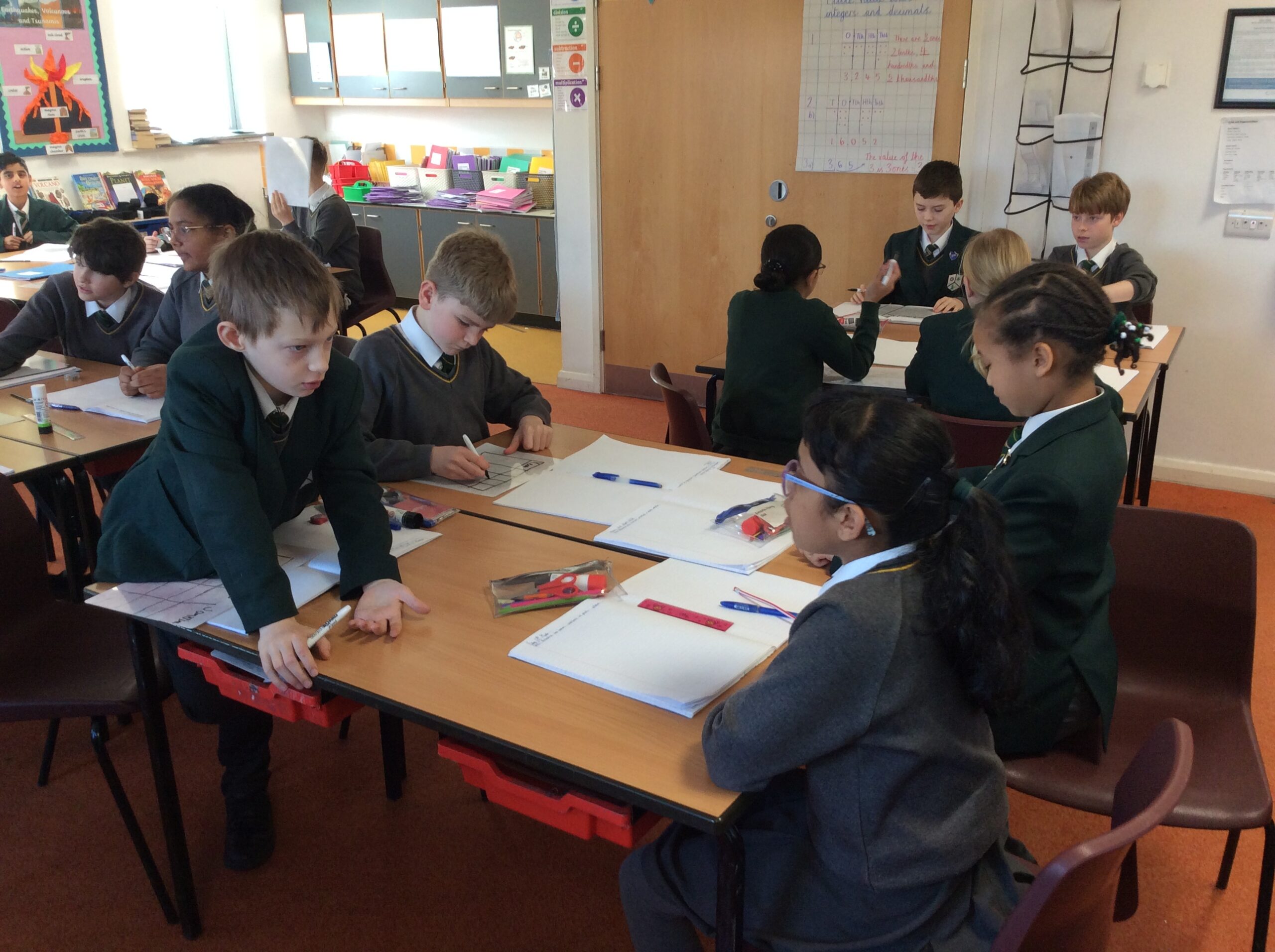
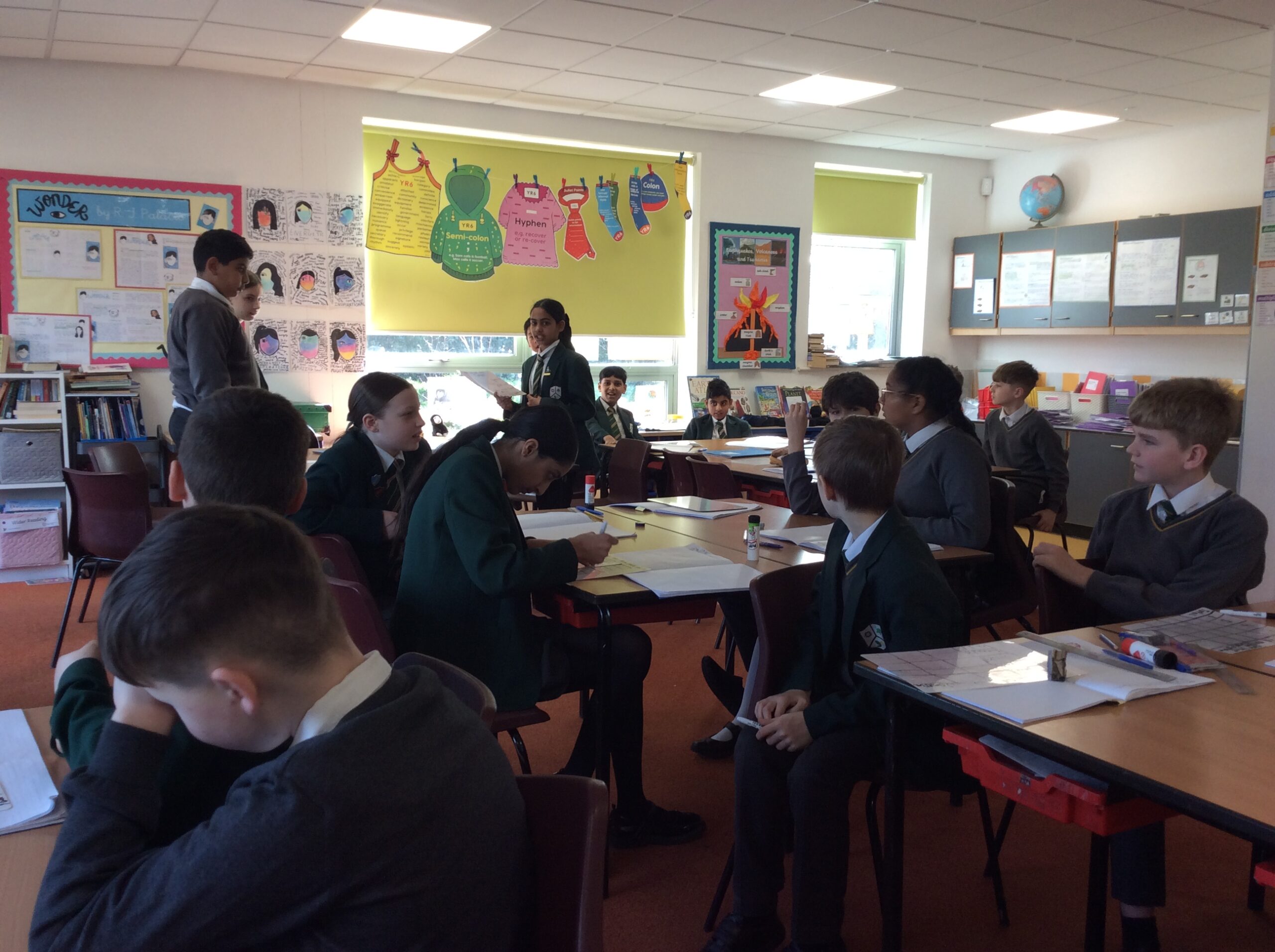
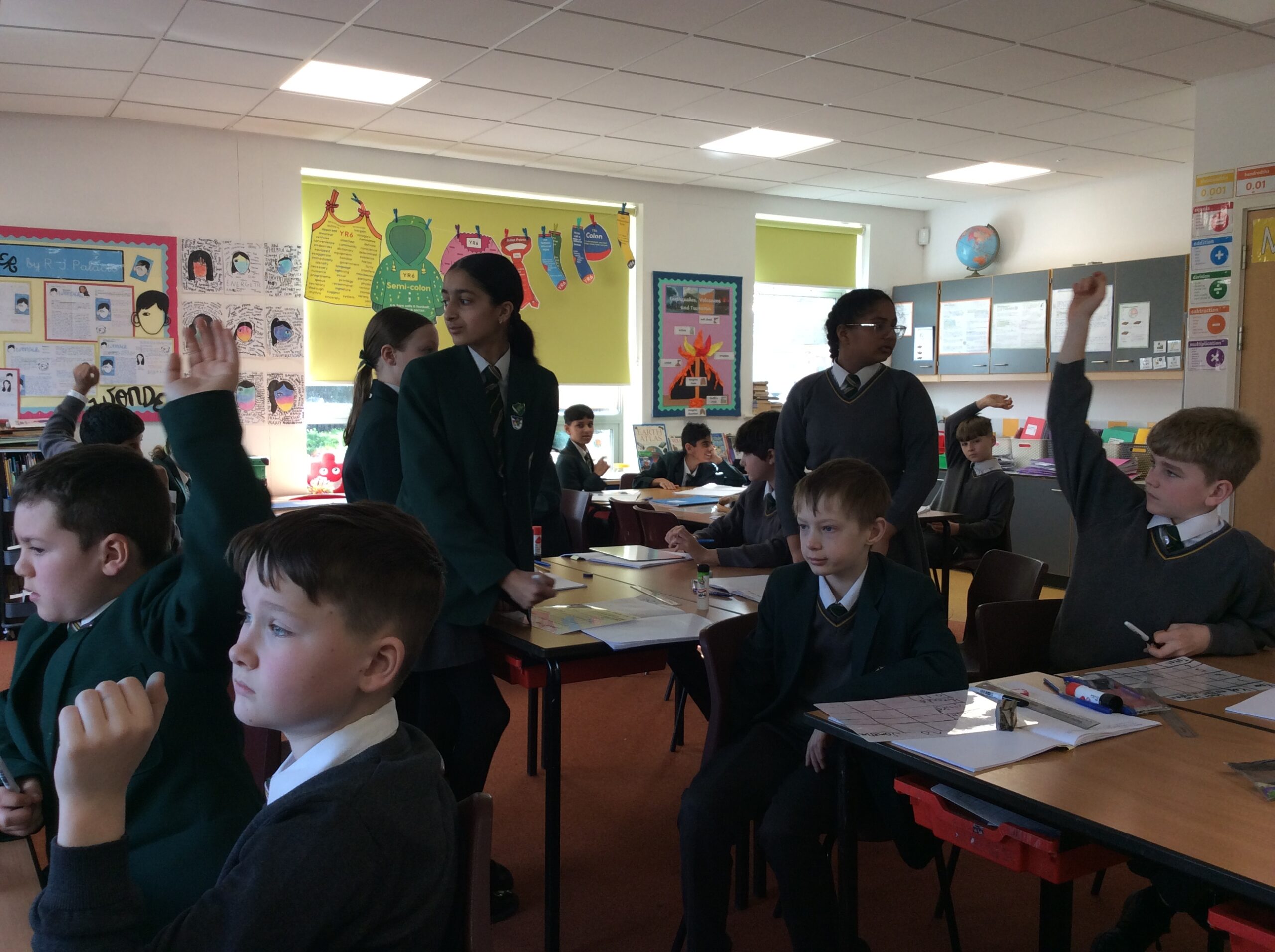
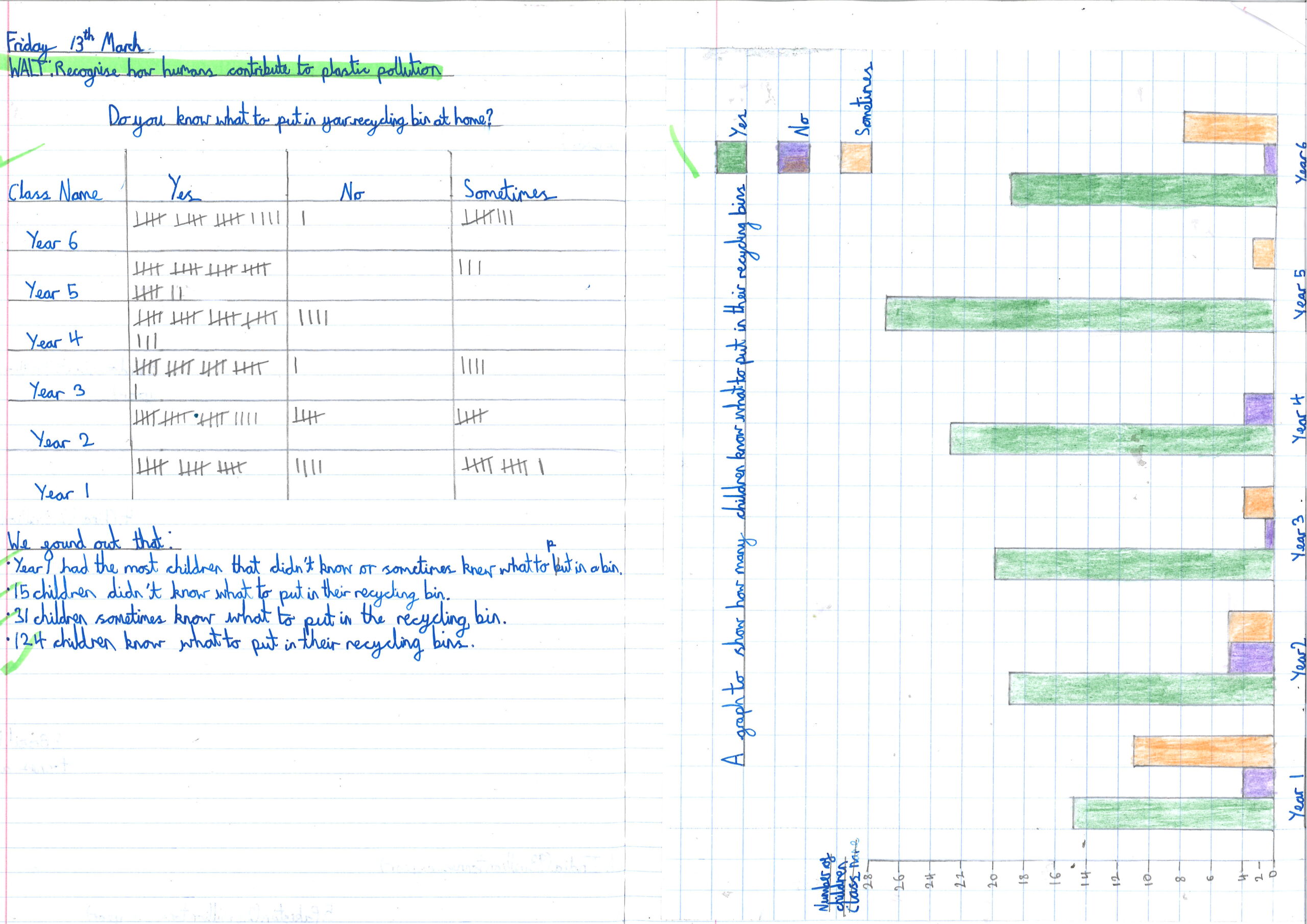
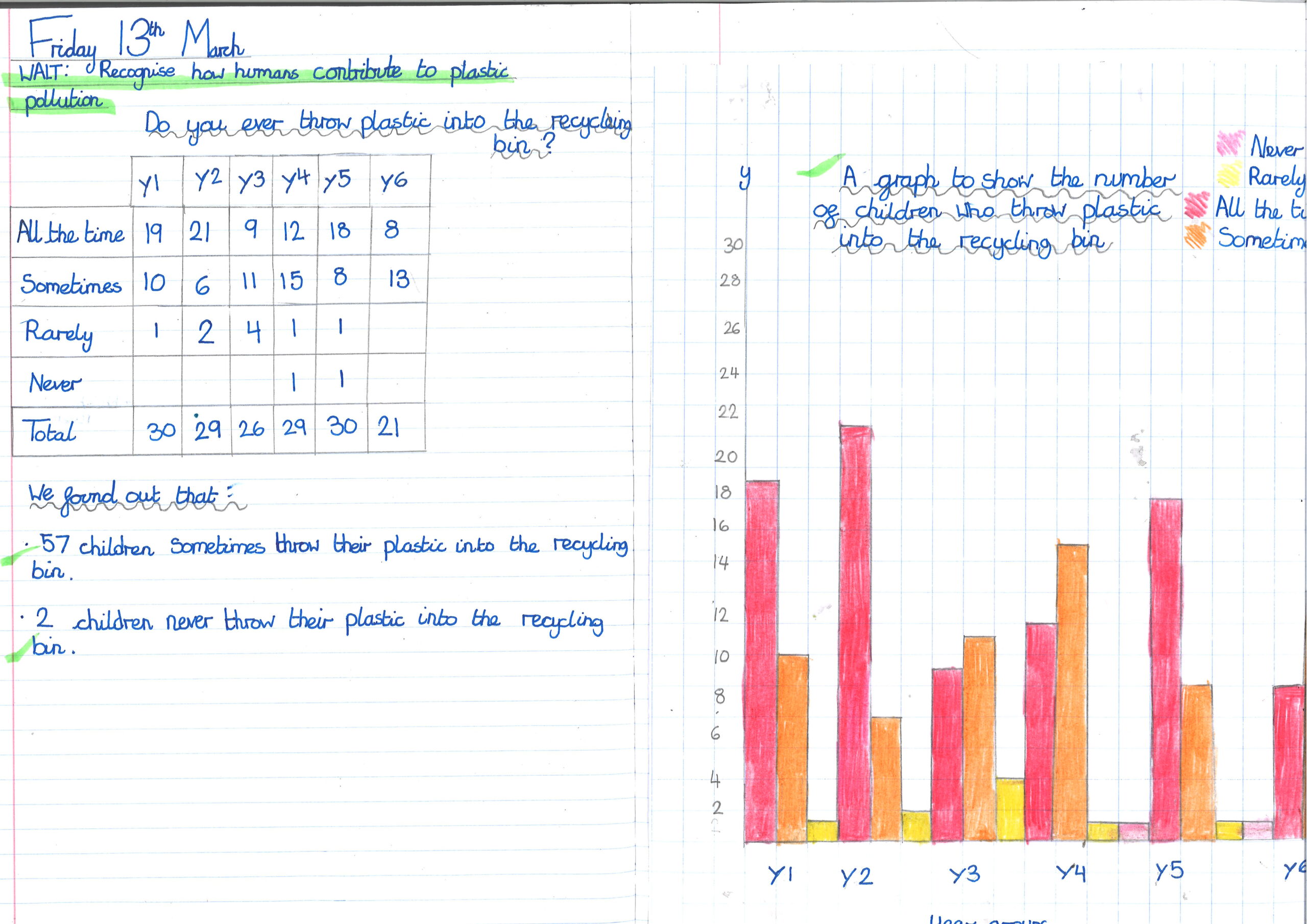
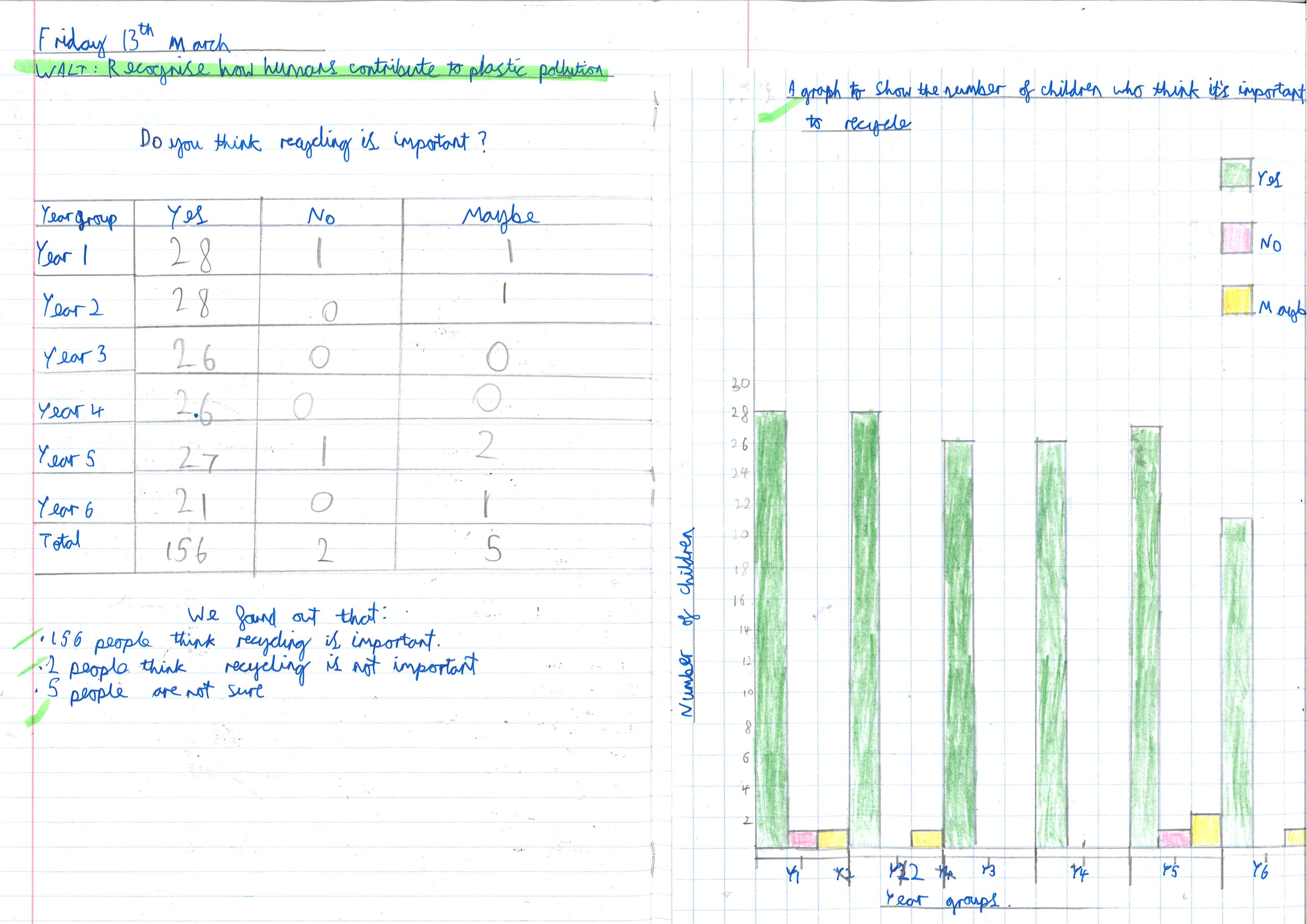
To understand recycling habits closer to home, pupils carried out a school‑wide survey. They asked questions such as:
- “Do you recycle at home?”
- “Do you know what items can be recycled?”
- “Do you think recycling is important?”
- “Would you like to recycle more?”
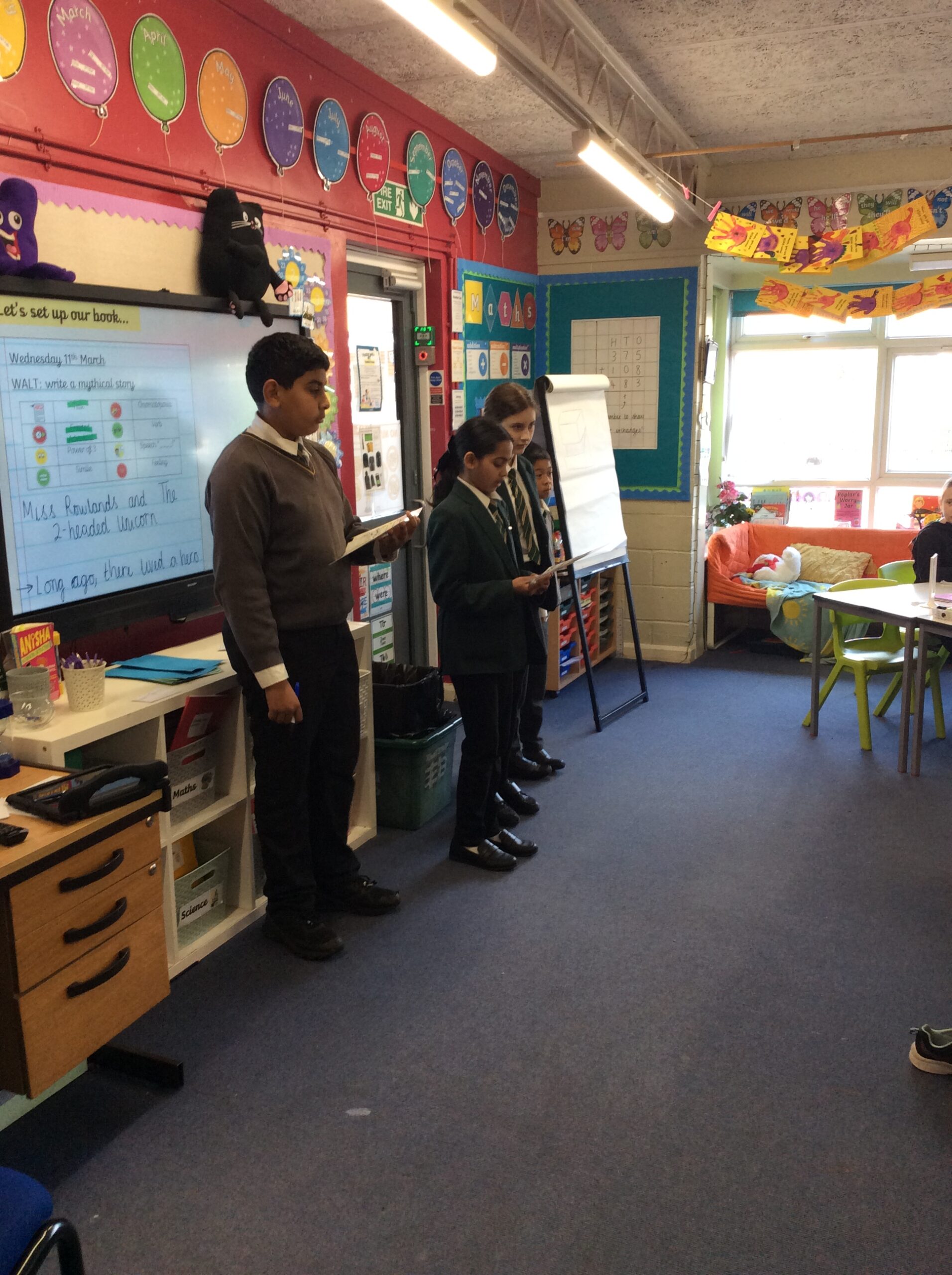
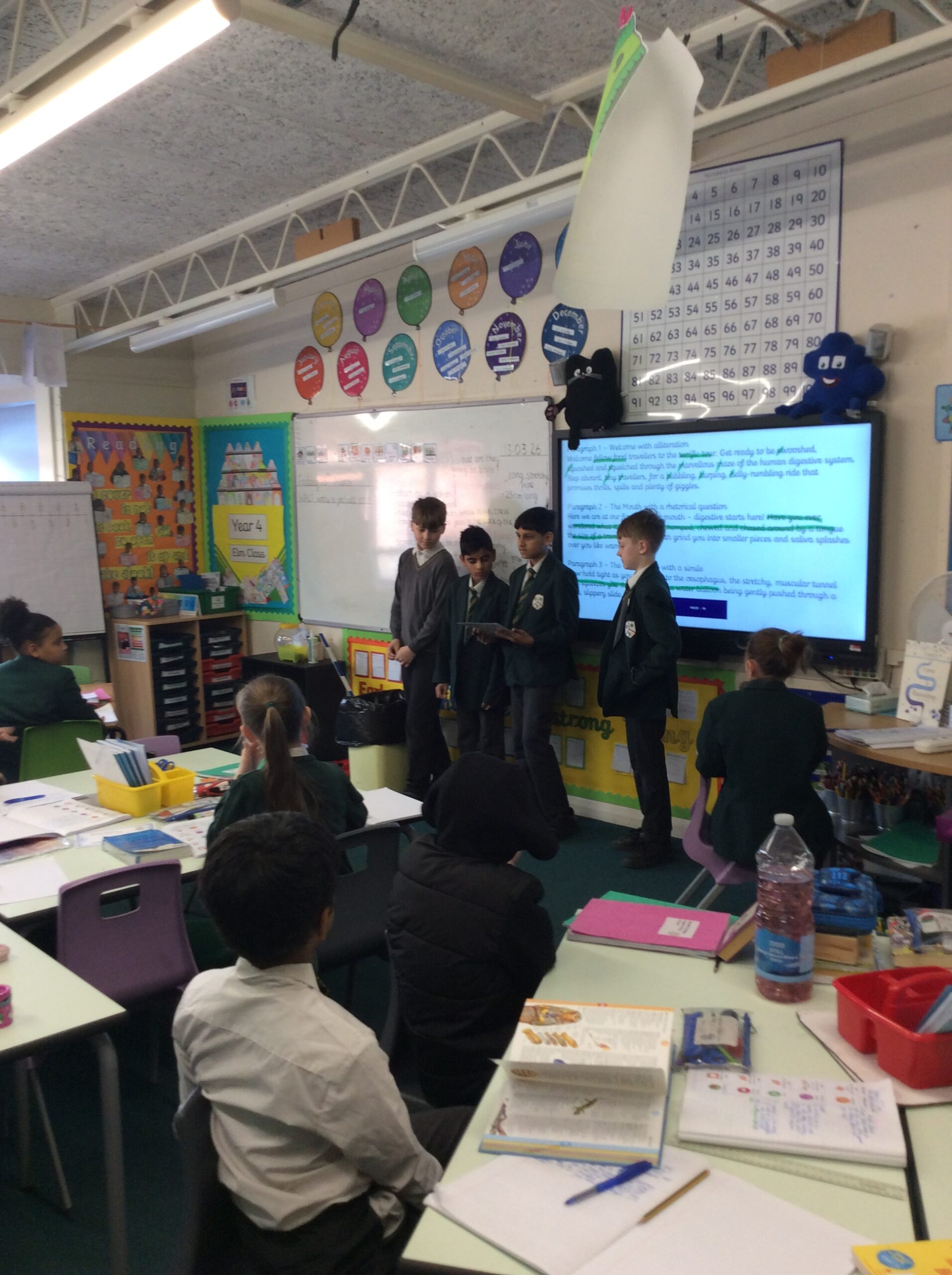
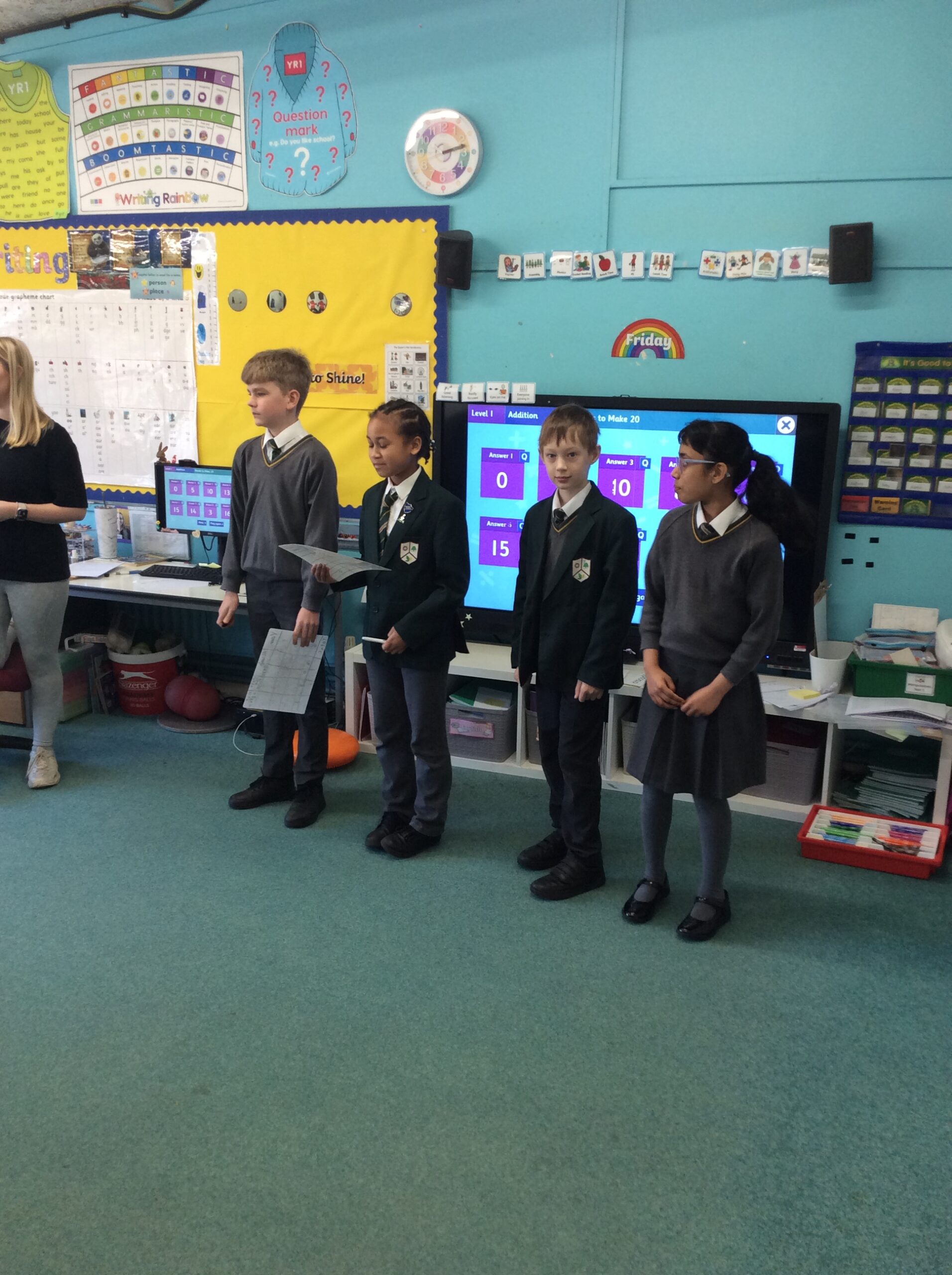
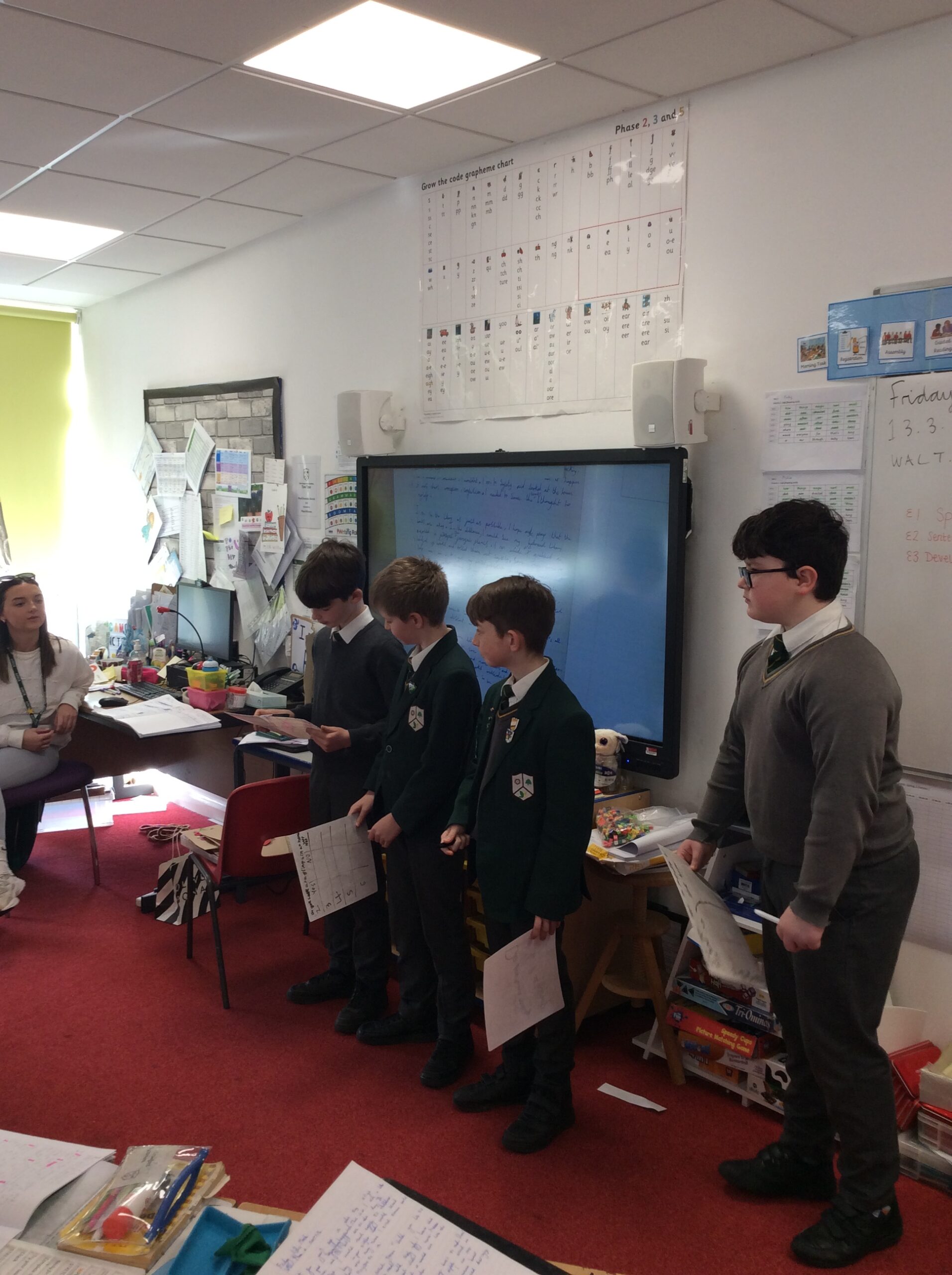
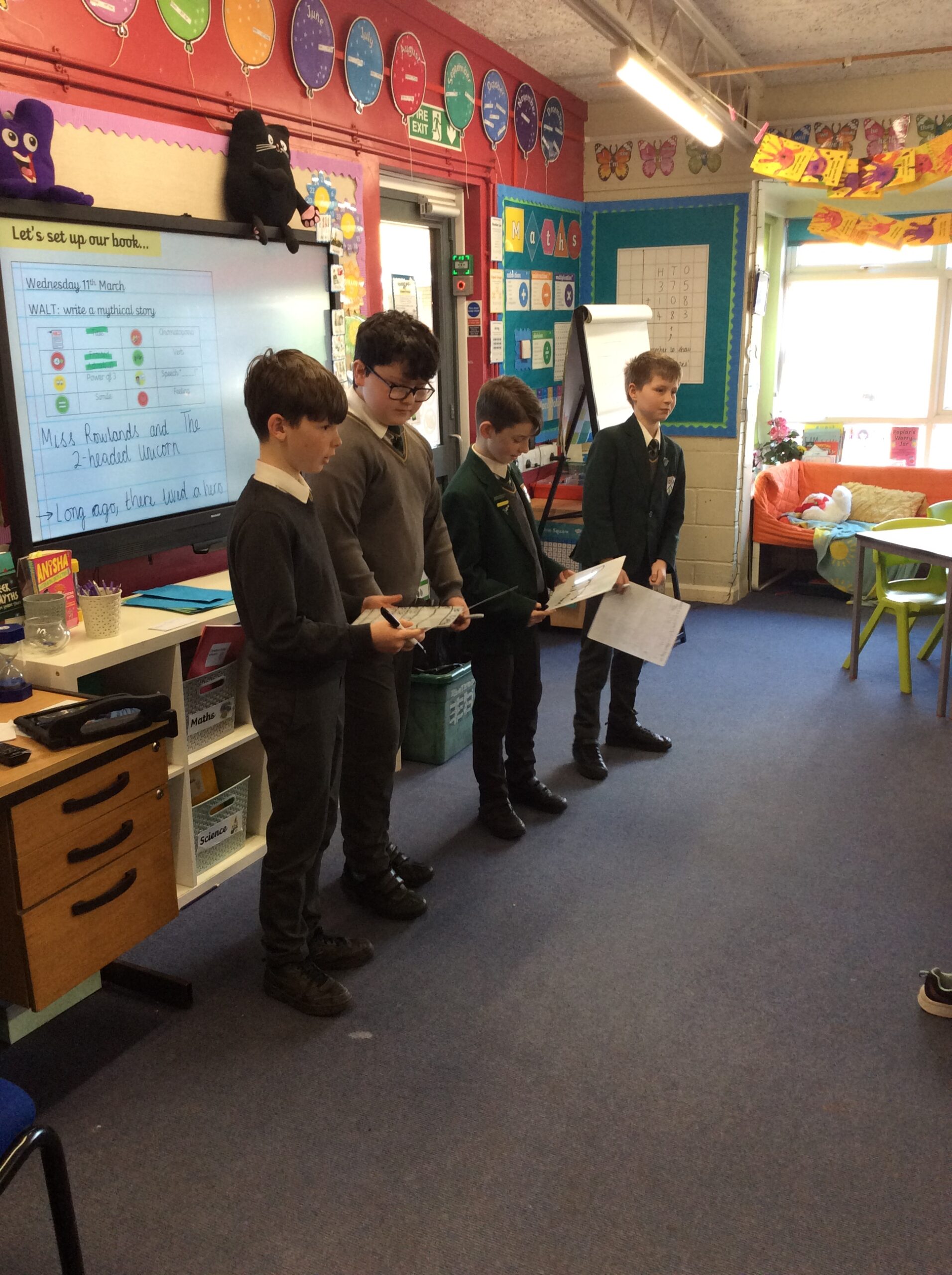
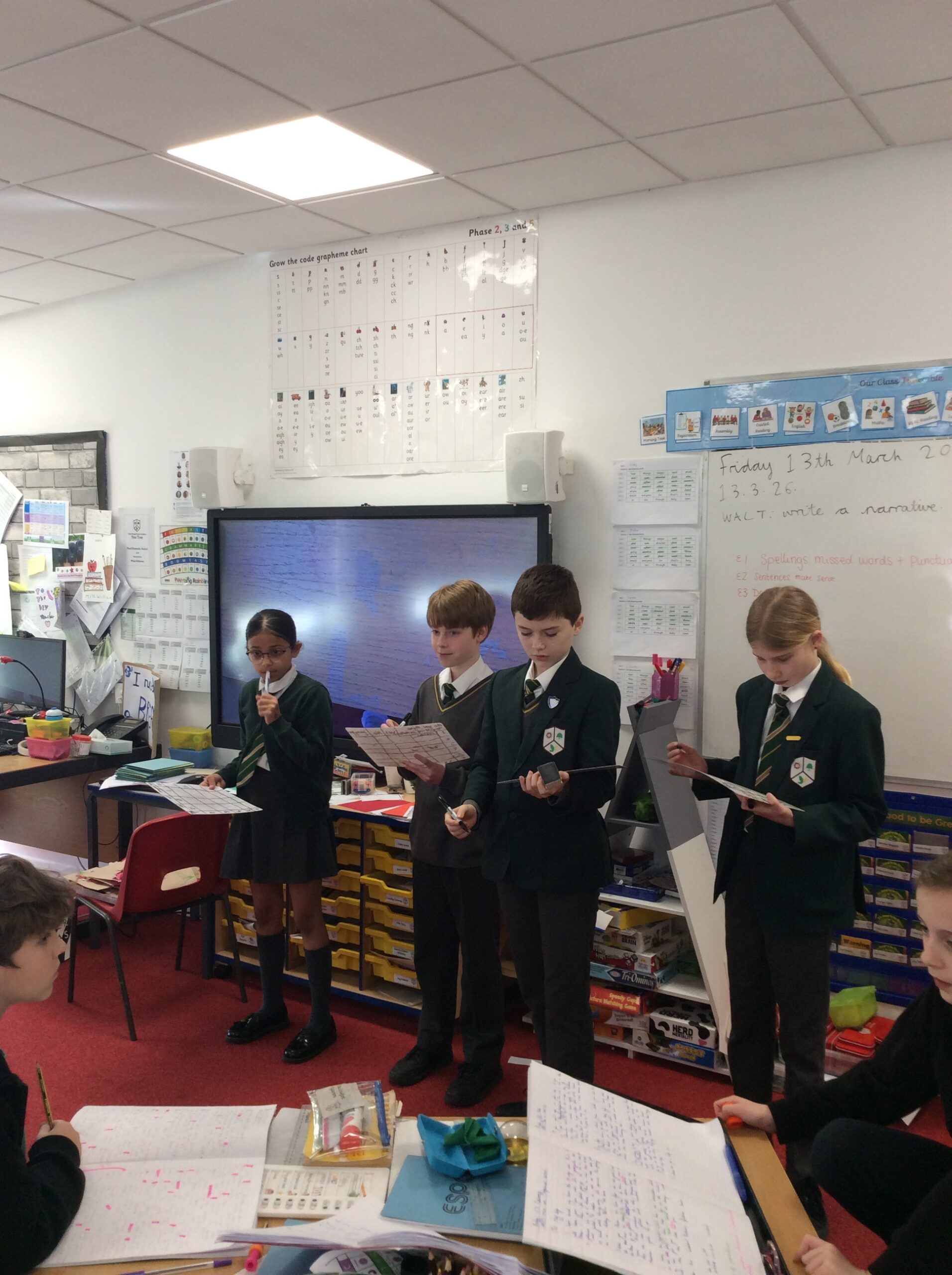
The results helped them think about how our school community could improve its recycling efforts.
Creating an Action Plan
Finally, pupils used their findings to create an action plan aimed at making a real difference. Some designed posters promoting the importance of recycling, others created information leaflets explaining what can be recycled, and several produced awareness posters encouraging everyone to reduce waste.
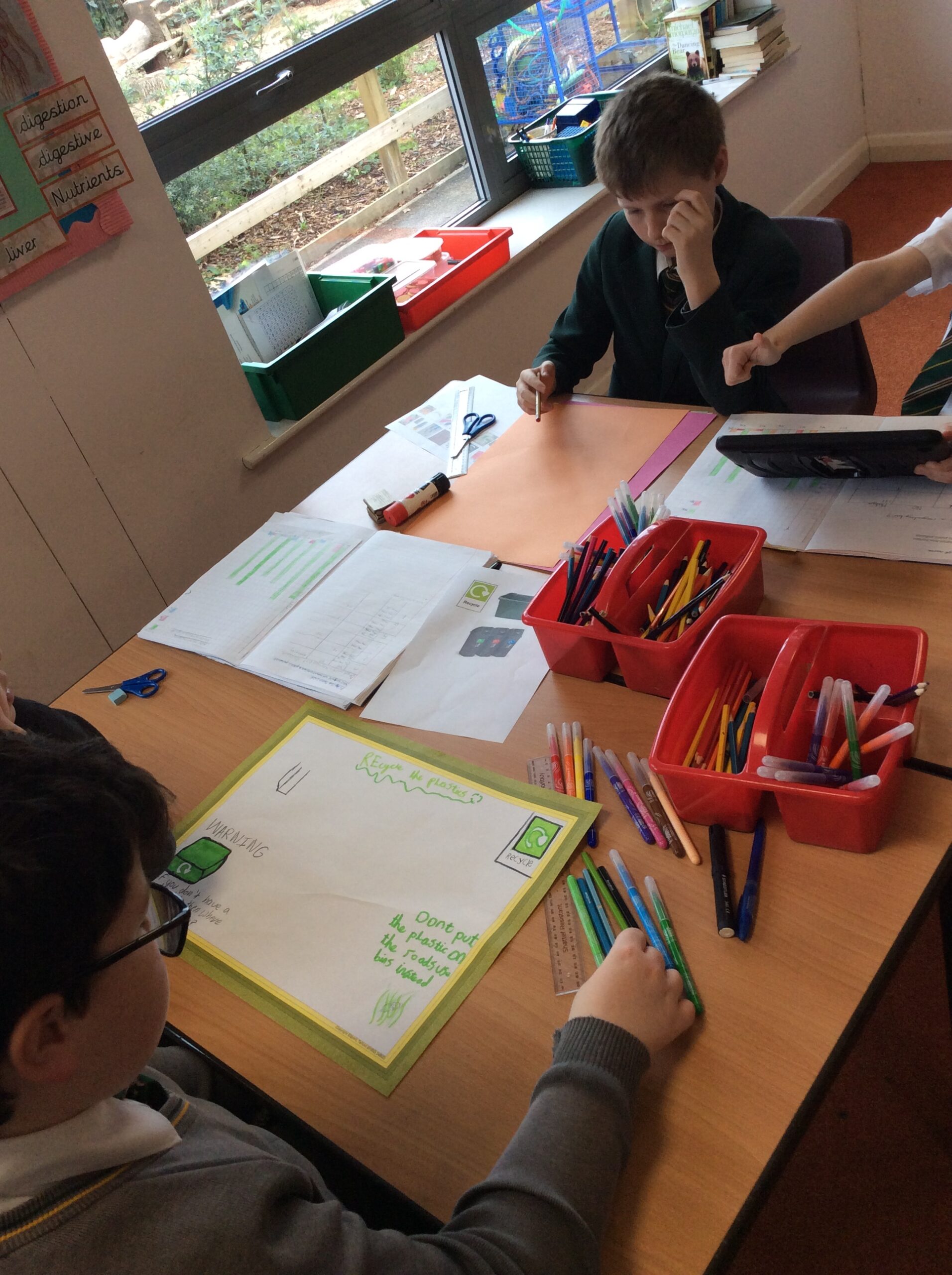
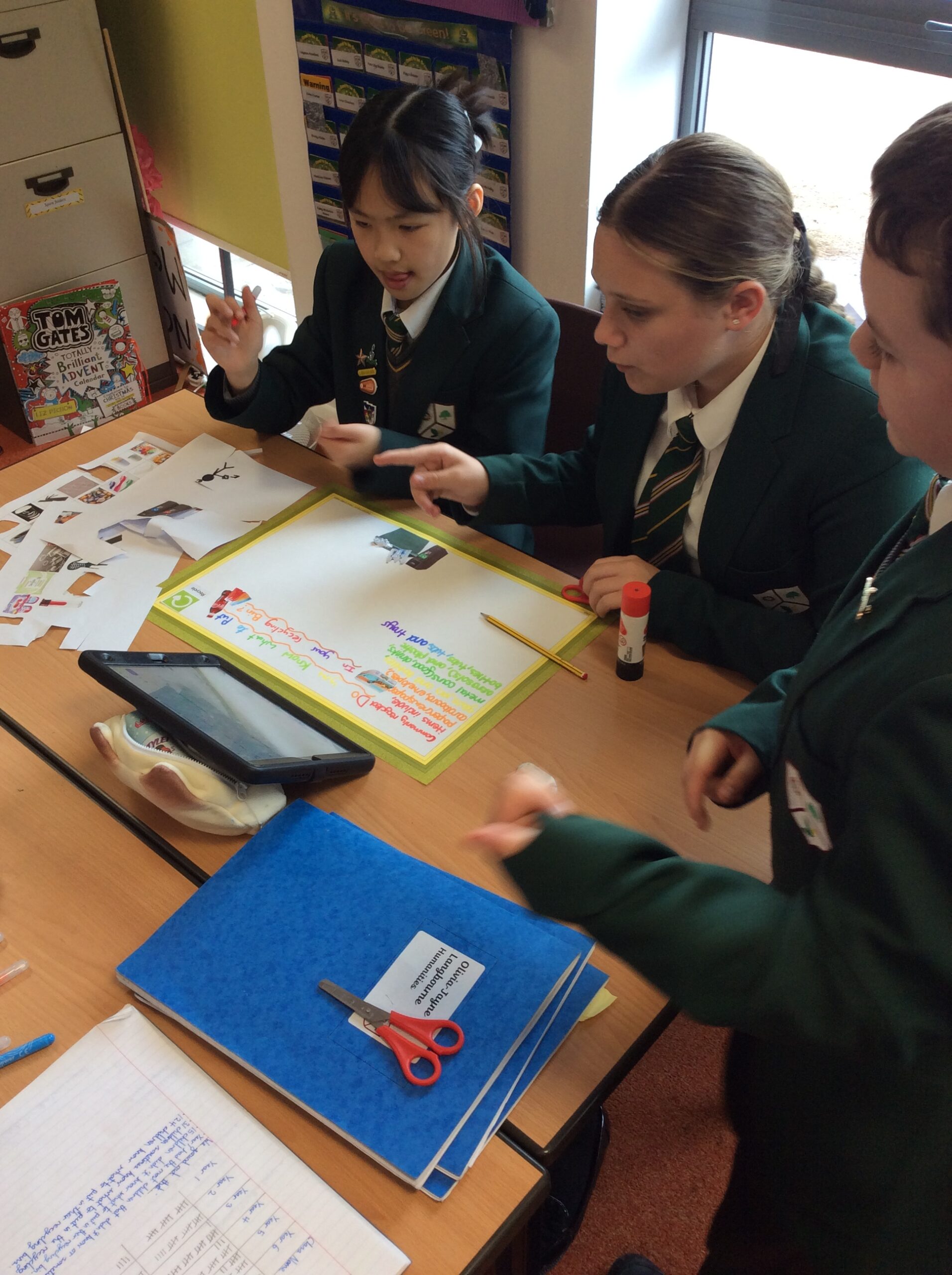
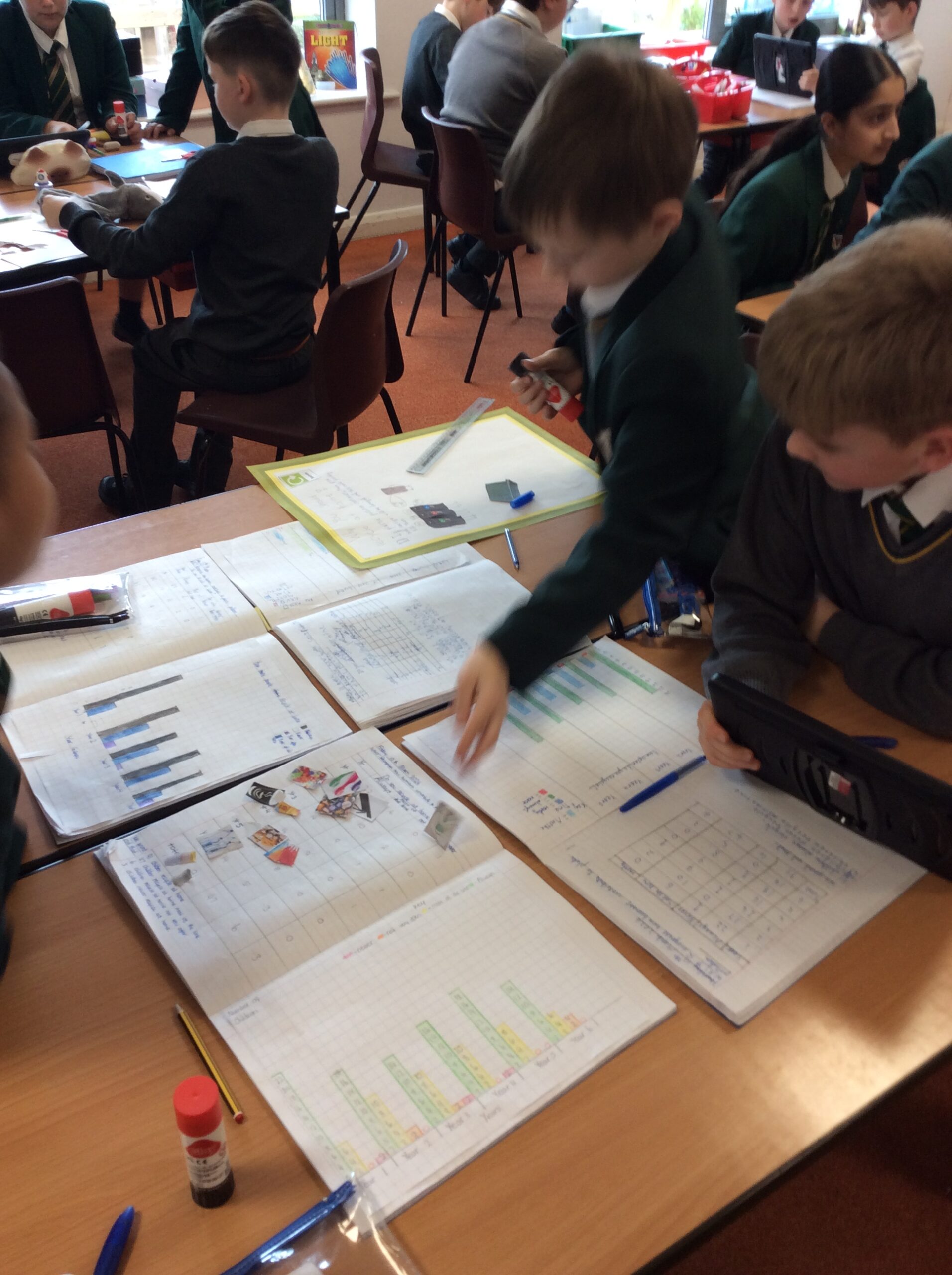
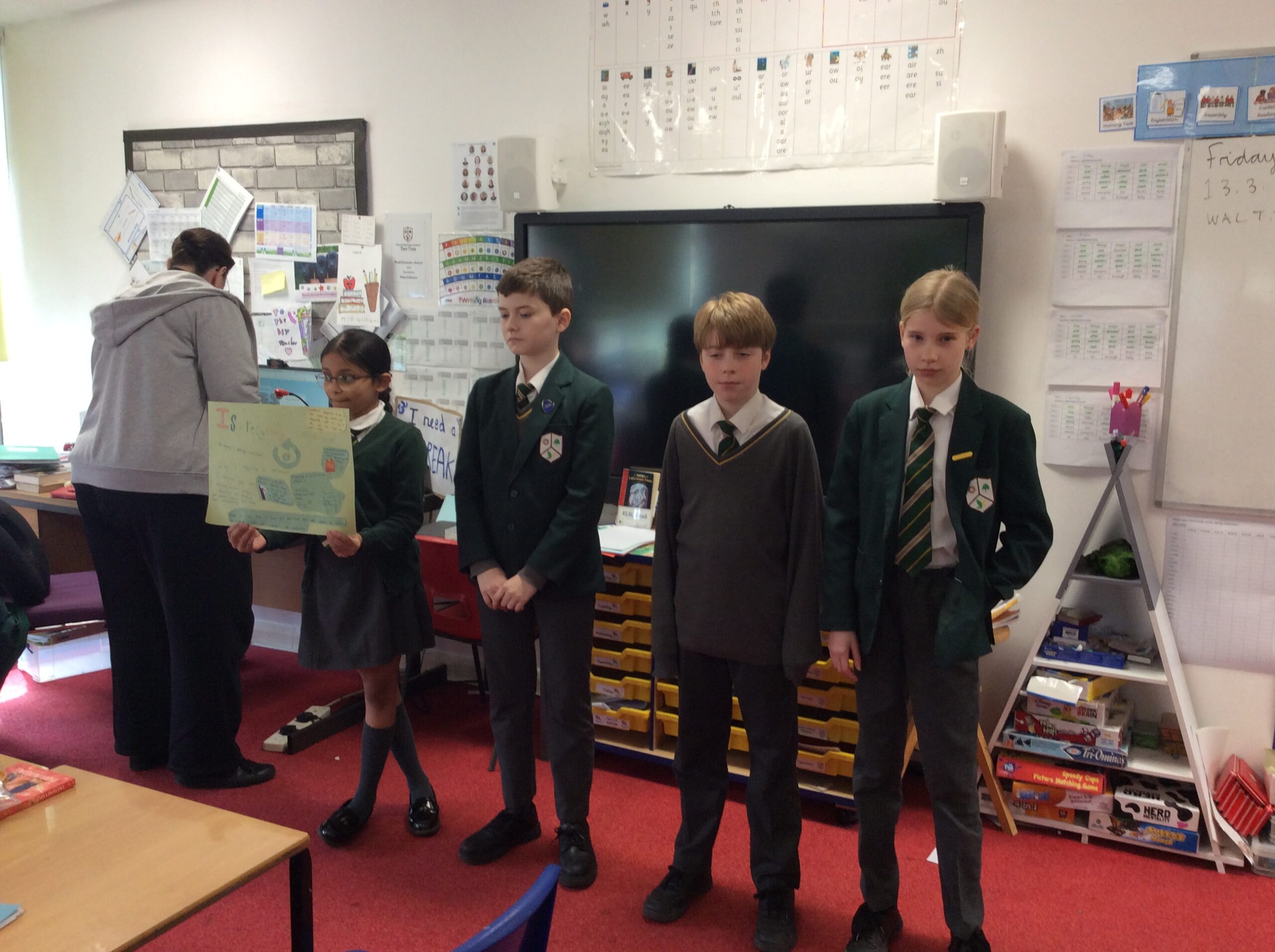
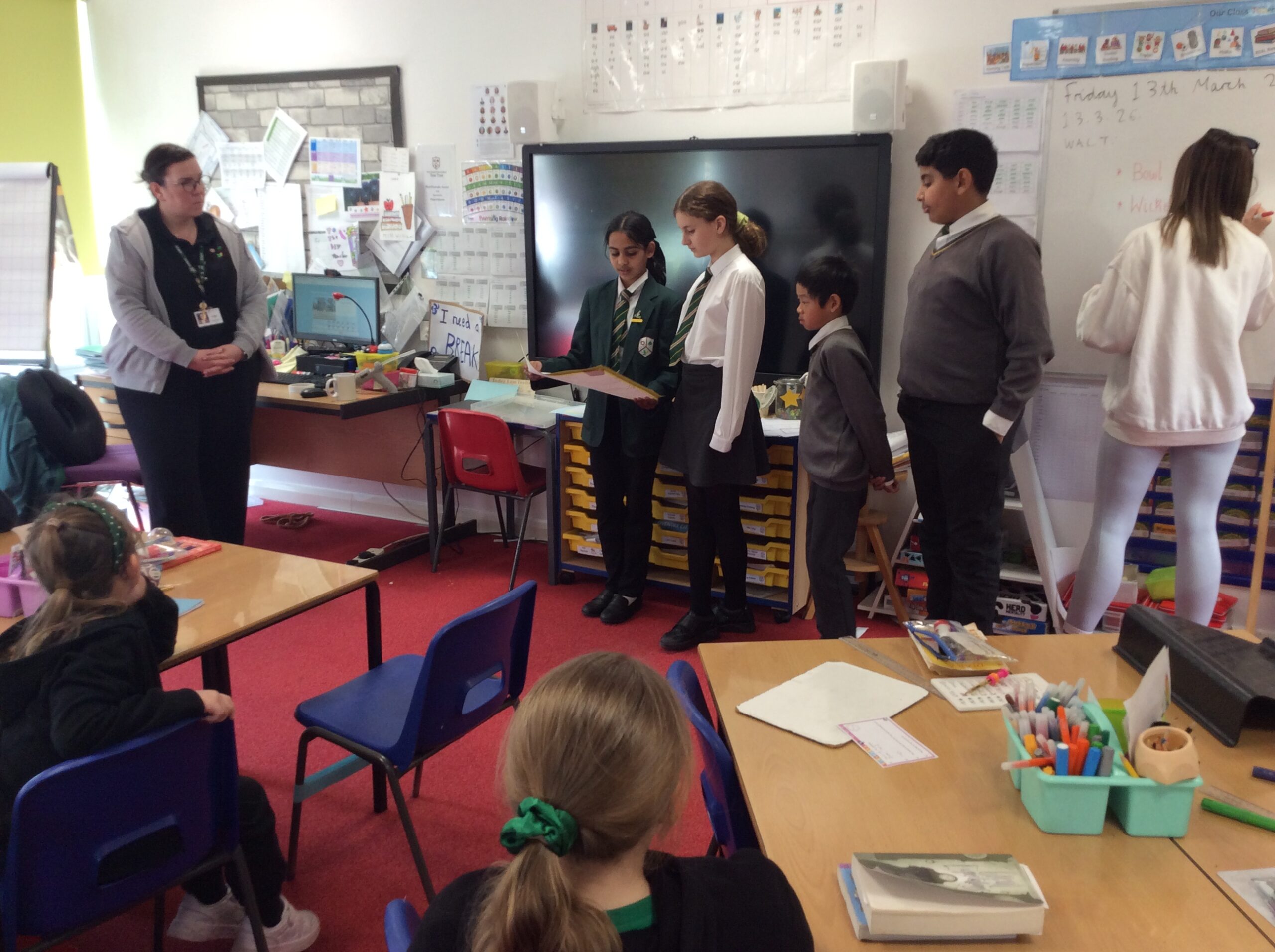
They returned to their target class to share their message about the importance of recycling.
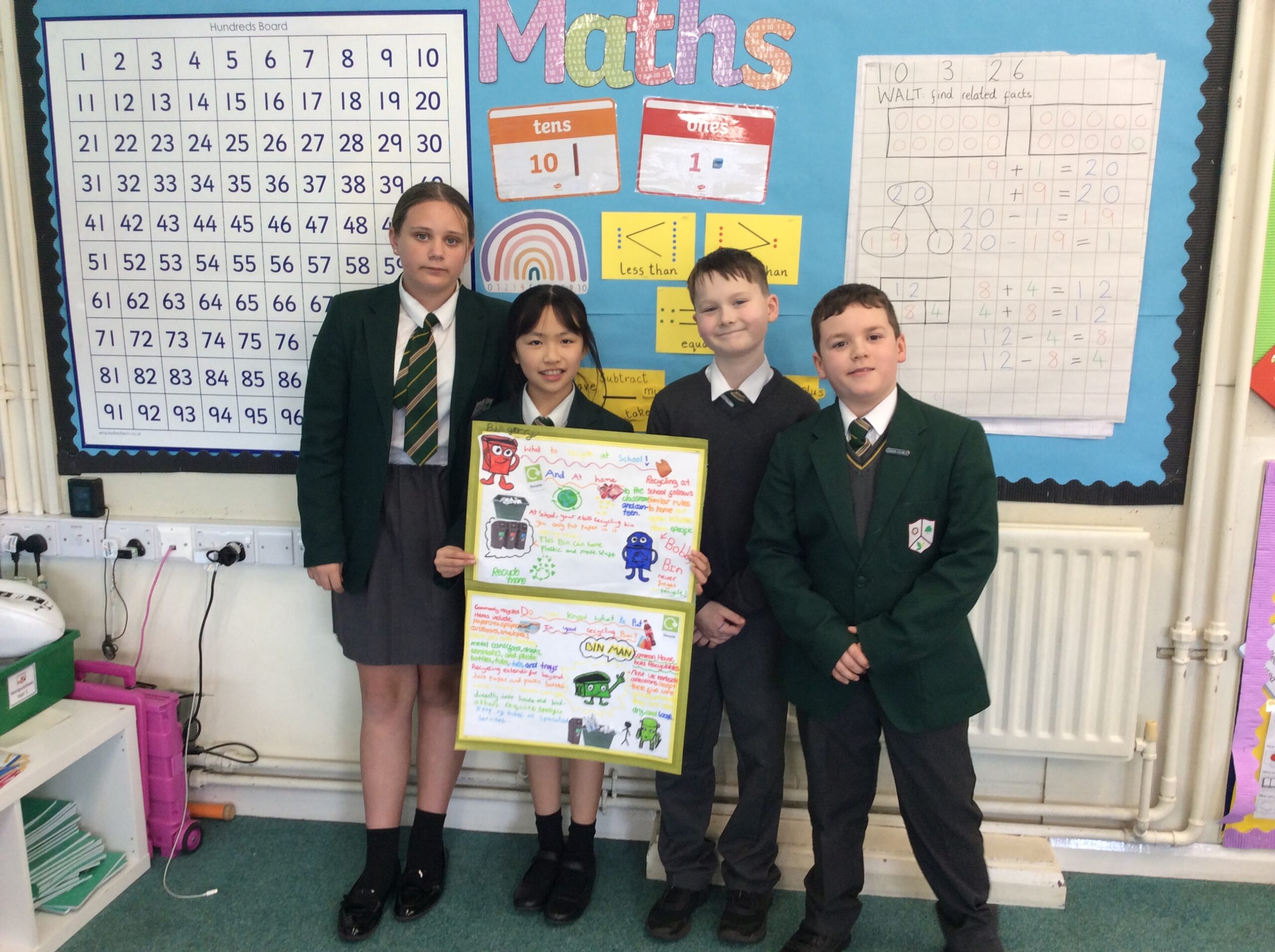
Well done Year 6, with the knowledge you have gained through this unit of work, you will be more conscientious citizens of the future!